A U-value can come from a physical test, a hand calculation, a component model or a manufacturer's tool. All four produce a number in W/m²K, and only the first two are independent of the product they describe.
How a U-value is measured, calculated, or modelled
rev Cissue 04rev Crots yes — the figures above move with the standarddrawn by The Transom Set (a named set, not a person)
The four routes
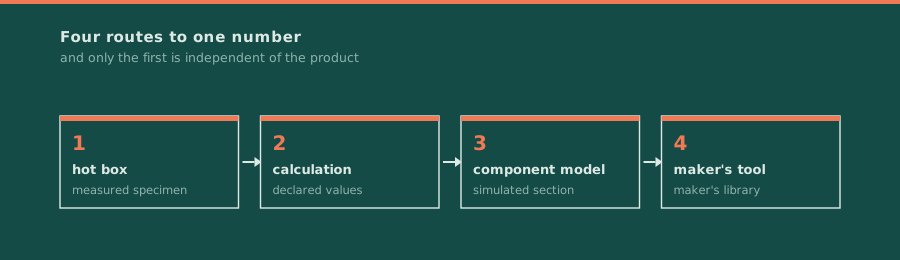
A guarded hot-box test measures a real specimen in a real frame under controlled conditions, and it is the reference every other route is compared against. A calculation follows the standard's arithmetic on declared material properties. Component modelling simulates the frame section and the glass separately and combines them. A manufacturer's tool does the third route with the manufacturer's own library.
- Decide which route the number has to come from, because the certificate and the drawing have to agree.
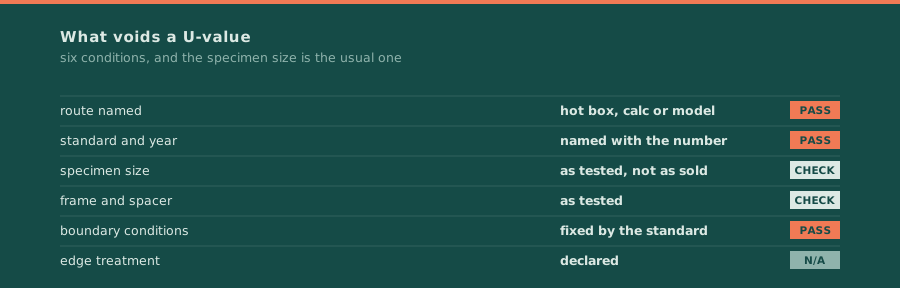
- Identify the specimen: size, frame material, spacer, glass build-up and any glazing rebate detail.
- Run the test, calculation or model with the boundary conditions the standard fixes, and record them.
- Report the number with the route, the standard, the specimen and the conditions — four fields, all of them on the certificate.
Why the routes disagree
The disagreements are almost never arithmetic. They are about area: how much of the assembly is counted as frame, how much as edge, and how much as glass. Two routes that treat the same 60 mm frame differently will produce two different whole-window figures from the same measurements, and both will be internally correct.
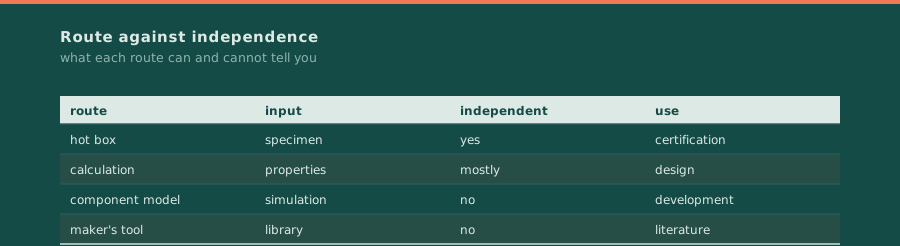
| Route | What it uses | Independent | Typical use |
|---|---|---|---|
| guarded hot box | a real specimen | yes | certification |
| calculation | declared properties | mostly | design stage |
| component model | simulated sections | no, depends on inputs | frame development |
| manufacturer tool | the maker's library | no | product literature |
A calculated U-value is not the same as a tested one, and a modelled one is not the same as either. All three can be right, but only the tested one describes a window that was built and measured.
Where this sheet stops
This page covers the routes and the fields. The edge figure that the routes disagree about is owned by the spacer page, the frame's break by the thermal break page, and the two-route disagreement itself by the revision on that subject.
Documents this sheet is drawn from
- 1ASTM C1199-22 Standard Test Method for Measuring the Steady-State Thermal Transmittance of Fenestration Systems Using Hot Box Methodssupports the hot-box test method used as the reference route
- 2ANSI/NFRC 100-2023: Procedure for Determining Fenestration Product U-factorssupports the calculation procedure for fenestration product U-factors
- 3ISO 10077-1:2017 Thermal performance of windows, doors and shutters - Calculation of thermal transmittance - Part 1: General (sample PDF)supports the international calculation standard the arithmetic follows
Each line points at one specific document, with its own title as the link text. No line is a home page and no line is a search result.
Sign the sheet and stop Sign the sheet and stop once you know which route produced the number. A U-value without its route is not a specification.