A mullion is the vertical extrusion in a curtain wall that spans between floors and carries the wind pressure on the glass back to the structure. It is sized by load and by a deflection limit, and the deflection limit is usually what governs.
Curtain wall mullion: the member that carries the wind
rev Cissue 04rev Crots yes — the figures above move with the standarddrawn by The Transom Set (a named set, not a person)
What sizes the member
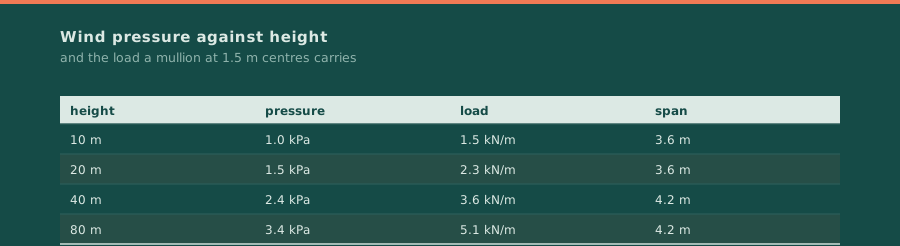
The wind pressure depends on height, terrain and the local code, and it rises steeply with height: a mullion at 40 m can carry twice the load of the same mullion at 10 m on the same site. The tributary width is half the distance to each neighbouring mullion, so spacing is a direct lever on the load and on the depth of the section.
| Height | Typical pressure | Mullion at 1.5 m | Note |
|---|---|---|---|
| 10 m | 1.0 kPa | 1.5 kN/m | low-rise |
| 20 m | 1.5 kPa | 2.3 kN/m | mid-rise |
| 40 m | 2.4 kPa | 3.6 kN/m | high-rise |
| 80 m | 3.4 kPa | 5.1 kN/m | tower |
Deflection is the limit that governs
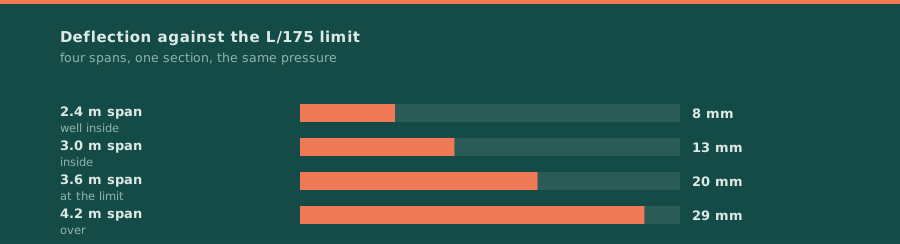
Most curtain wall specifications limit the mullion deflection to L/175 of its span under the design wind, or to 20 mm, whichever is less. That limit is not structural: a mullion that deflects more than that does not fall down, but it moves the glass edges far enough to strain the seals and it can be seen from inside. On a 3.6 m span the limit is about 20 mm, and most aluminium sections reach the deflection limit before they reach their stress limit.
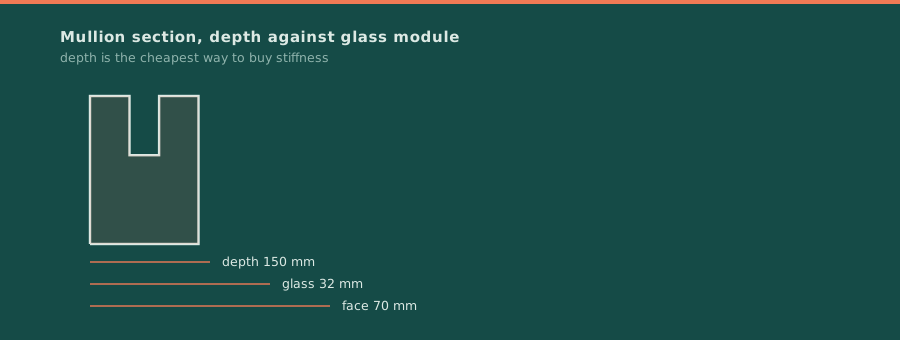
The consequence is that a mullion is usually a stiffness problem rather than a strength problem, and the cheapest way to solve a stiffness problem is depth. That is why the mullion is the deepest part of most curtain wall sections, and why the glass module and the mullion depth are chosen together.
A mullion is not the same as a transom. The mullion runs vertically and spans between floors; the transom runs horizontally between mullions and spans one glass module. They carry the same pressure in different directions and are sized from different spans.
Where the definition stops
This page owns the vertical member. The break inside it is owned by the thermal break page, the glass it holds by the unit and laminated glass pages, and the structural performance test by the test that pressurises the assembly. Nothing here is repeated there.
Documents this sheet is drawn from
- 1Fundamentals of Structural Curtainwall Design (STRUCTURE magazine)supports the structural design basis for a curtain wall mullion
- 2Design of Curtain Walls for Wind Loads - Details and Calculationssupports the wind load calculation and the deflection limit used here
- 3Unitised Curtain Walls (Springer, facade construction reference)supports the unitised curtain wall construction the mullion belongs to
Each line points at one specific document, with its own title as the link text. No line is a home page and no line is a search result.
Sign the sheet and stop Sign the sheet and stop once you know the wind pressure and the deflection limit. The depth of the section follows from those two.