A water penetration rating states the pressure at which a specimen showed no uncontrolled leakage, under a specified spray and for a specified time. It is a test result, and every attempt to read it as a weather statement runs into the same three gaps.
Water penetration test pressure ratings, decoded
rev Cwritten 2026-08-06issue 04rev Crots yes — the figures above move with the standarddrawn by The Transom Set (a named set, not a person)
The three gaps
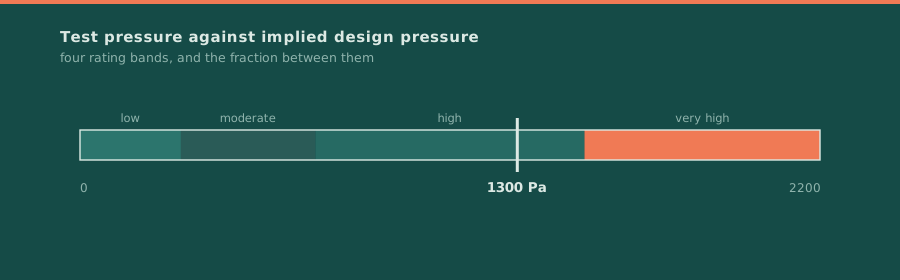
The first gap is the specimen: a rating belongs to the size that was tested, and the perimeter-to-area ratio changes when the size changes. The second is the spray: the method fixes a rate and a nozzle distance, and real wind-driven rain does not arrive at a fixed rate. The third is duration: a test holds a constant pressure for a period, and a storm applies a varying pressure for longer.
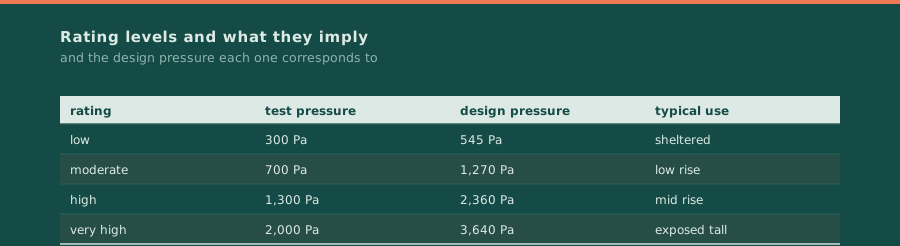
| Rating | Test pressure | Implied design pressure | Note |
|---|---|---|---|
| low | 300 Pa | 545 Pa | sheltered low-rise |
| moderate | 700 Pa | 1,270 Pa | typical low-rise |
| high | 1,300 Pa | 2,360 Pa | mid to high rise |
| very high | 2,000 Pa | 3,640 Pa | exposed tall buildings |
What a rating does establish
It establishes that the assembly, as tested, did not leak under a defined condition. That is a real and useful fact: it means the design has a drainage and sealing strategy that works, and it means a specimen was built to the drawings and held together. Almost every failure it rules out is a design failure rather than a weather failure.
It does not establish that the window will not leak in a storm. Storms apply gust pressures above the design pressure, they apply them from angles the test does not use, and they do it to an installation rather than to a chamber specimen. The rating describes the product; the building is a separate question.
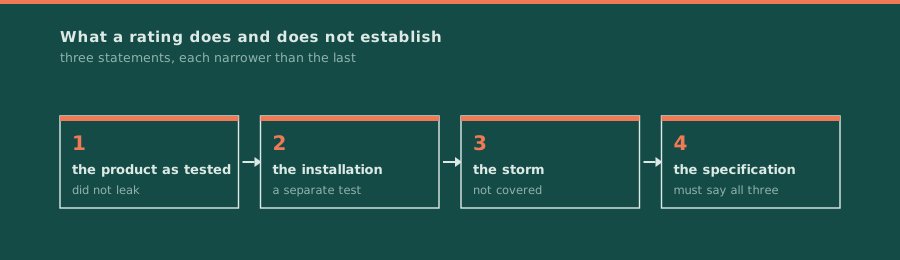
A laboratory rating is not the same as a field result, and a field test is not the same as a storm. Each of the three establishes something narrower than the one before it, and a specification that quotes only the first has quoted the widest and least specific of the three.
What this changes
It changes what should be written into a specification. A rating should be quoted with its method, its specimen size and its duration, and the specification should state separately what the installation has to achieve and how it will be verified. Those are three sentences, and a specification that has only the first one has left the other two to the contractor.
Documents this sheet is drawn from
- 1ASTM E331: Water Penetration of Exterior Windows, Skylights, Doors and Curtain Walls (Intertek)supports the water penetration test method and the pressure levels it defines
- 2AAMA 502: Field Testing Quality Control (air and moisture penetration of new window installations)supports the field testing quality control method applied to installed windows
- 3Revised AAMA 501-24 document enhances testing (Metal Architecture)supports the current revision of the field testing standard and what it changed
Each line points at one specific document, with its own title as the link text. No line is a home page and no line is a search result.
Sign the sheet and stop Sign the sheet and stop once you have the rating, its method and its specimen size. The wind speed is a separate calculation.