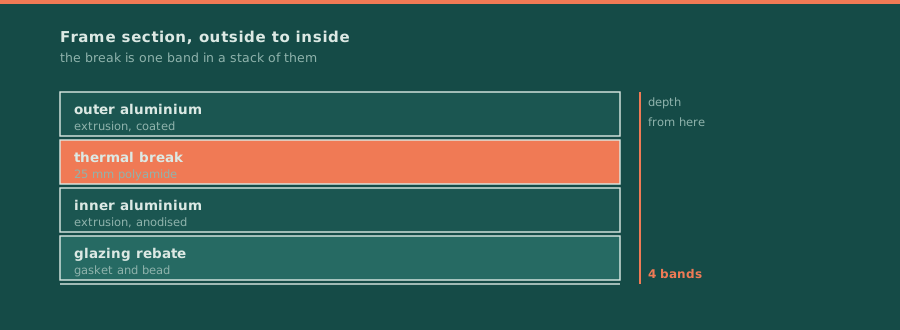
A thermal break is a piece of low-conductivity material separating the inner and outer parts of a metal window or curtain wall frame, so the metal does not carry heat straight through the section. It is the single largest frame-side improvement available.
Thermal break: the bridge in the metal, and its two failure modes
rev Cissue 04rev Crots yes — the figures above move with the standarddrawn by The Transom Set (a named set, not a person)
What the break is made of
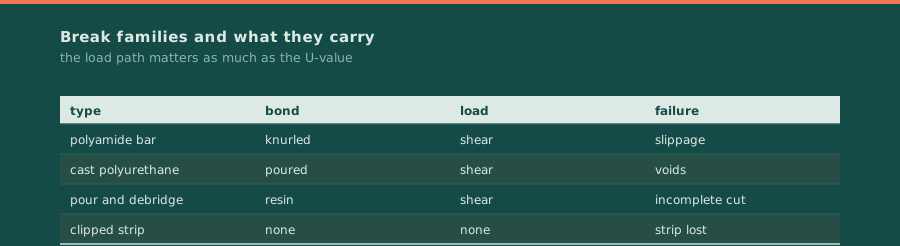
Two families dominate. Polyamide or polyurethane breaks are cast into the section or inserted as a bar and rolled in, and they carry structural load as well as heat. Pour-and-debridge breaks fill a channel with resin and then cut the aluminium web away, leaving the resin as the only path. Both work; they fail differently.
| Break type | How it is made | Carries load | Failure mode |
|---|---|---|---|
| polyamide bar, rolled in | inserted then knurled | yes, in shear | slippage at the knurl |
| cast polyurethane | poured into a channel | yes, in shear | voids in the pour |
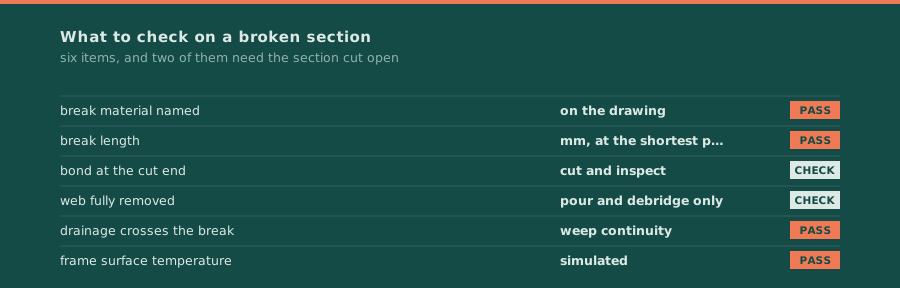
| pour and debridge | resin poured, web cut | yes | incomplete web removal |
| non-structural thermal strip | clipped, no bond | no | loss of the strip |
The two failure modes
The first is debond: the break separates from the aluminium, so the two halves of the section are no longer one member. It shows up as a crack line along the break, or as a section that moves when pushed. It is usually found at the cut end of a section or at a corner, where the break is shortest and the shear stress is highest.
The second is condensation that appears on the frame rather than on the glass. The break did its job on the glass edge and then became the coldest surface itself, because the break is thin and the frame around it is not. That is not a defect in the break; it is a defect in the whole detail, and the fix is at the detail level.
A thermal break is not the same as a spacer bar. The spacer is inside the sealed glass unit and moves the edge of glass; the break is in the metal frame and moves the frame surface. A frame can have one, both or neither.
Where the definition stops
This page owns the break. The frame it sits in is owned by the mullion page, the edge of glass by the spacer page, and the procedure for checking a break by the thermal break test. Nothing here is repeated there.
Documents this sheet is drawn from
- 1Understanding Thermal Breaks in Building and Construction (Kawneer)supports the explanation of how a thermal break is formed and what it carries
- 2AISI S250-21: North American Standard for Thermal Transmittance of Building Envelopes with Cold-Formed Steel Framingsupports the thermal transmittance method used for framed assemblies
- 3Tubelite 400T Thermal Curtain Wall Helps Meet Energy Codes (Glass Magazine)supports the case of a thermally broken curtain wall section meeting an energy code
Each line points at one specific document, with its own title as the link text. No line is a home page and no line is a search result.
Sign the sheet and stop Sign the sheet and stop once you know which break family the section uses and whether it carries load. The rest of the frame figure follows.