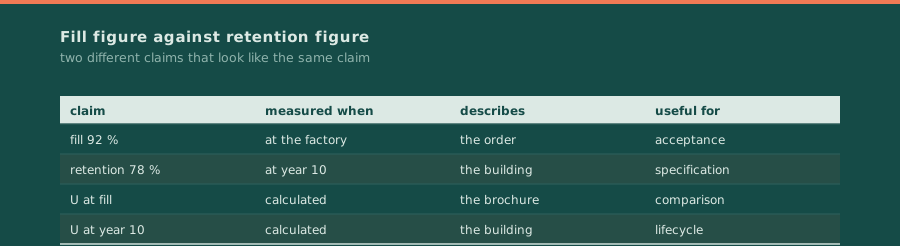
Argon is put into a sealed unit because it conducts less heat than air. It leaks out slowly through the seals, and the rate depends on the seal rather than on the gas. The interesting figure is not the fill percentage on the order; it is the retention measured years later.
Argon loss over time: what the measurements show
rev Bwritten 2026-09-05issue 04rev Bdrawn by The Transom Set (a named set, not a person)
What was measured
Retention studies take units of known fill and measure the gas concentration years later, either by taking a sample from the cavity or by a non-destructive method through the glass. The spread between studies is wide, and most of it is explained by the seal system rather than by the gas.
| Measurement point | Retention | Note |
|---|---|---|
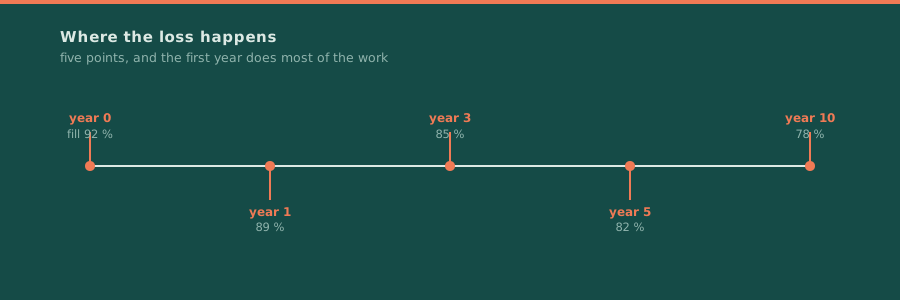
| as filled | 88–95 % | the target is never 100 % in practice |
| after 1 year | 85–92 % | the fast initial loss is the seal settling |
| after 5 years | 78–88 % | the rate flattens |
| after 10 years | 72–85 % | spread is mostly seal system |
Why the spread is so wide
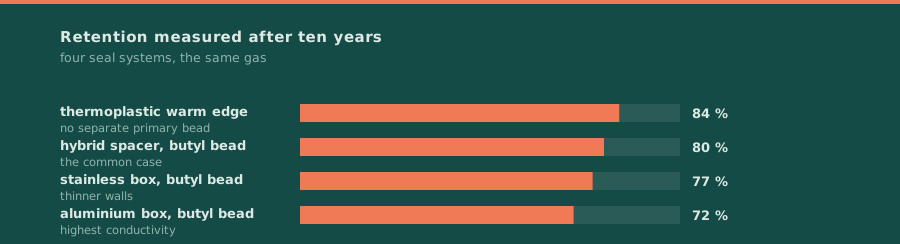
Three things decide the rate. The primary butyl seal's continuity around the perimeter is the first, and a single thin spot dominates the result. The secondary seal's permeability to argon is the second. The spacer's own permeability is the third, and a thermoplastic spacer with no separate primary bead behaves differently from a metal box with one.
That is why a retention figure is a statement about a seal system and not about argon. Two units with the same glass, the same cavity and the same fill will show different retention curves, and the difference will be entirely at the edge.
Argon loss is not a defect on its own. A unit that has lost twenty points of argon is doing slightly worse than it was designed to and is not failing. A unit that has lost its seal has lost the argon and gained moisture, and the second of those is the failure.
What this changes
For specification, it changes the value of a high fill figure. Paying for a 95 % fill that retains 72 % is not obviously better than paying for a 90 % fill that retains 80 %, and the retention figure is the one that describes the building in ten years. For inspection, it changes what a gas measurement means: a low reading is evidence of a seal problem, not a fill problem.
Documents this sheet is drawn from
- 1Performance Improvements in Insulating Glass Unitssupports the published performance improvements in insulating glass units over service life
- 2Field Evaluation of Highly Insulating Windows in the Lab Homes: Winter Experiment (PNNL-21678)supports the field evaluation of highly insulating windows measured over a winter season
- 3Performance Criteria for Residential Zero Energy Windows (LBNL)supports the performance criteria used to judge whether a window meets a target over time
Each line points at one specific document, with its own title as the link text. No line is a home page and no line is a search result.
Sign the sheet and stop Sign the sheet and stop once you know the fill and the retention. The retention is the one that describes the building.