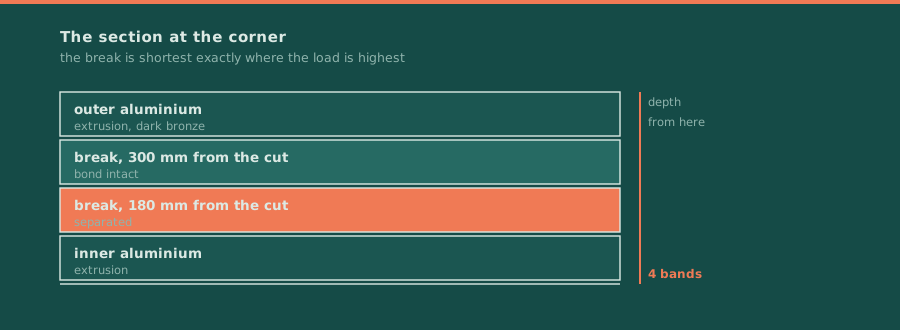
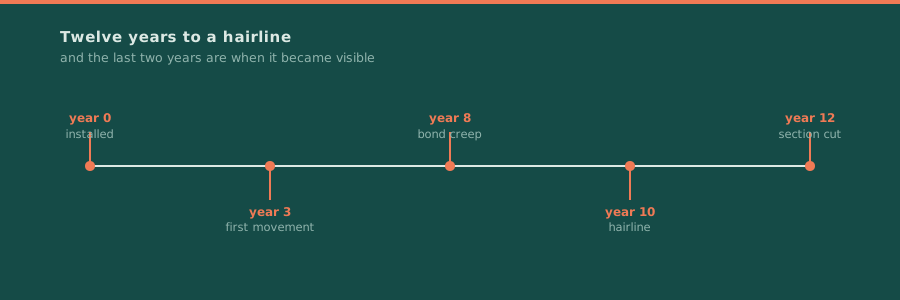
A curtain wall frame at a corner opened a hairline along its thermal break. The section had been in service for twelve years. The break had separated from the aluminium over about 180 mm, and the separation started at the cut end where the break is shortest.
Thermal break debond: the section that came apart
rev Bwritten 2026-07-10issue 04rev Bdrawn by The Transom Set (a named set, not a person)
What was found
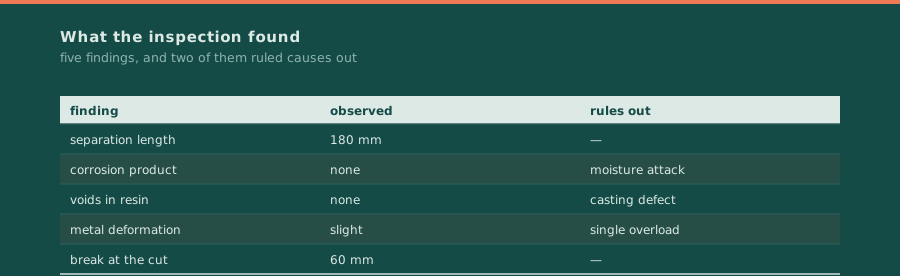
The inspection cut a sample from the corner and sectioned it. The break had separated cleanly from the aluminium on the outer side over 180 mm, with no corrosion product and no voids in the resin, which ruled out the two failures that are usually looked for first. The bond had not failed chemically; it had been pulled apart mechanically.
| Finding | Observed | Ruled out |
|---|---|---|
| separation length | 180 mm from the cut | — |
| corrosion product | none | galvanic or moisture attack |
| voids in the resin | none | a casting defect |
| deformation of the metal | slight | a single overload event |
| break length at the cut | 60 mm | — |
Why the cut end
A thermal break carries load in shear along its length, so the stress on the bond is the total load divided by the bonded length. At a corner the break is cut short to make the mitre, and the bonded length falls while the load does not. Every corner in the frame is therefore the highest-stress point in the section, and the corner is also where the two directions of thermal movement meet.
The same mechanism explains why debond shows up on long dark elevations first. A dark frame in sun reaches a higher temperature than a light one, moves further, and puts more shear on the same bond. Colour and exposure are part of the structural calculation, not just the architectural one.
A hairline along a break is not the same as a debond. A line can be a paint edge, a shadow line or a joint in the extrusion. The only reliable check is a section cut from a sample and examined, which is why a suspicion is confirmed by removing a piece rather than by looking harder.
What this changes
It changes where an inspection should look and what it should record. The corner and the cut end are the points to check, and the record should carry the exposure and the colour because they are part of the load. It also changes what a specification should require: a minimum bonded length at the cut, stated on the shop drawing, rather than left to the fabricator's standard practice.
Documents this sheet is drawn from
- 1AISI S100-16: North American Specification for the Design of Cold-Formed Steel Structural Memberssupports the structural design specification that the load path in the break follows
- 2AISI S240-20: North American Standard for Cold-Formed Steel Structural Framingsupports the framing standard that the section's structural role is assessed against
- 3ASTM C1401-14 Standard Guide for Structural Sealant Glazingsupports the structural sealant glazing guide that the inspection method follows
Each line points at one specific document, with its own title as the link text. No line is a home page and no line is a search result.
Sign the sheet and stop Sign the sheet and stop once you have the bonded length at the cut end. That number is the whole case.